Build an ADU
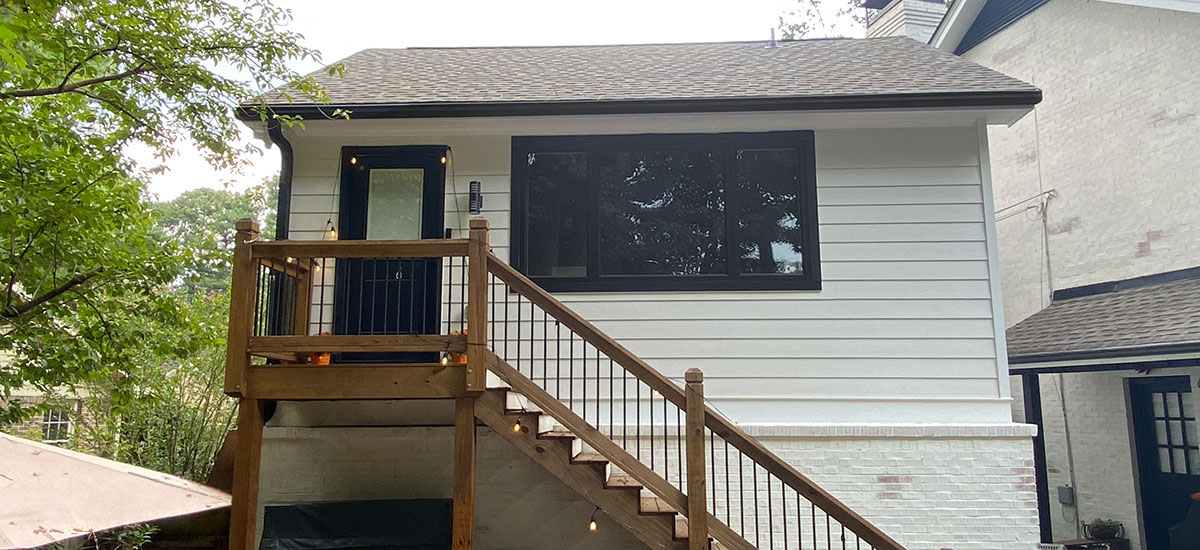
An accessory dwelling unit built above a garage with a wooden staircase and string lights

An ADU could be a backyard cottage, or as in the picture, an apartment built above the garage. Many families see an ADU as a practical first step toward independence: close enough for support, separate enough to feel like home.

Pros
  • Less costly than purchasing a separate home
  • Can be customized to fit individual needs
  • Provides a gradual step toward independence
  • Individual remains connected to the neighborhood and community
  • Family could potentially provide supports
  • Avoids risk of eviction
Cons
  • May not be allowed under local zoning
  • Requires funds for construction and maintenance

Some parents choose to create a separate space on the family’s property for their loved one with a disability. This could be a room with its own entrance added to the family home, or a separate stand-alone building called an accessory dwelling unit (ADU).

For some families, this is a first step toward independence, with plans to use the space differently once their loved one is ready to live further from home. For others, it’s a longer-term arrangement, with the person eventually moving into the main house when parents are no longer living, and the ADU becoming a caregiver’s quarters or a rental.

Start here: Before spending any money, check whether your county or city allows ADUs. Rules vary a lot across Georgia, and not every property qualifies.

The steps below walk you through the process of building an ADU.

1

Call or visit your local planning or zoning office and ask: "Can I build an accessory dwelling unit at my address?" You can also search for your county's planning department at georgiaassociation.org. They can tell you what's allowed, how large it can be, and how far it has to be from property lines and other structures.

Things to ask about:

  • Is an ADU allowed in my zoning district?
  • What's the maximum size?
  • How far does it have to be from the fence or property line?
  • Does it need its own water and electric meter?
  • Are there any owner-occupancy requirements?
2

A survey shows the exact boundaries of your property. Your county may already have one on file, check with the tax assessor's office before paying for a new one. If you do need a current survey, a licensed surveyor will measure your lot and produce an official document showing where you can build.

This document is usually required with your permit application.

3

ADUs range widely in cost, from around $30,000 for a small modular unit to $150,000 or more for a custom-built addition. Common ways to pay for an ADU include:

  • Home equity loan or line of credit (borrowing against your home's value)
  • Cash-out refinance (refinancing your mortgage and taking out extra)
  • Personal savings
  • Construction loan through a local bank or credit union
Prefab or modular ADUs are often significantly less expensive than site-built ones and can be built faster. Georgia Housing Search lists some accessibility-focused resources. They're worth exploring if cost is a concern.
4

To get a building permit, you'll need drawings that show what you're building and where. You have a few options for getting these:

  • Hire a local residential designer or draftsperson, less expensive than a full architect, and sufficient for most simple ADU projects
  • Use a modular ADU company, they often handle the drawings and permitting as part of their package
  • Hire a licensed architect, a good choice if the design is complex or if you want to build in accessibility features from the start

If your loved one uses a wheelchair or needs other physical accommodations, plan for those now, it's much less expensive to build accessibility in than to add it later.

Your county building department may have a pre-approved ADU plan library. Using a pre-approved plan can speed up the permitting process significantly.
5

Submit your application to the county building department. You'll typically need to include:

  • A site plan showing where the ADU sits on your lot
  • Drawings showing the floor plan and how it will be built
  • Electrical, plumbing, and HVAC plans
  • Your property survey

Review times vary, some counties take a few weeks, others take a few months. Ask when you submit so you know what to expect.

6

Get quotes from at least two or three contractors before choosing. Ask each one:

  • Have you built ADUs before?
  • Are you licensed and insured in Georgia? (Verify at verify.sos.ga.gov)
  • Can you provide references from recent projects?
  • What does your contract cover, and what isn't included?

If you're going with a modular ADU company, they typically handle delivery and installation as a package.

Ask your contractor to walk you through the inspection schedule before work begins so you know what to expect at each stage.
7

Once building starts, your contractor is responsible for scheduling inspections at key milestones. These typically include:

  • Foundation, before concrete is poured
  • Framing, before walls are closed in
  • Rough electrical, plumbing, and HVAC
  • Insulation
  • Final inspection

You don't have to be present for inspections, but it's worth checking in regularly with your contractor to stay informed.

8

Your ADU will need water, sewer or septic, and electricity at minimum. Some counties require separate meters; others allow sharing with the main house. Confirm the requirements with your building department early, utility connections can take time to arrange and can affect your project timeline.

9

When construction is complete, the county does a final walkthrough. If everything meets code, you'll receive a Certificate of Occupancy, the official document that says the ADU is safe to live in. Once you have this, you're ready to move in.

10

Once your loved one moves in, a few things are worth planning for:

  • Maintenance: Who handles repairs? Budget for ongoing upkeep just as you would for the main house.
  • Changing needs: If support needs increase over time, is the ADU set up to accommodate that?
  • Future use: Some families plan for the ADU to eventually house a caregiver or be rented out. Having a plan now avoids difficult decisions later.
Back to DIY Housing Options
Option Advantages Disadvantages
Independent actionsClick on each Option to view details
Build an Accessory Dwelling Unit or an Addition to Current Family Home
  • Less costly than purchasing a separate home
  • Can be customized to fit individual needs
  • Provides a gradual step toward independence
  • Avoids risk of eviction
  • Family could potentially provide supports
  • May not be allowed under local zoning
  • May be isolating
  • Requires funds for construction and maintenance
Buy a Single-Family Home, Duplex or Condo
  • Provides option for having roommates, which can lower cost
  • Avoids risk of eviction
  • Can be customized to fit individual needs
  • Requires funds for purchase and maintenance, plus homeowner association (HOA) fees
  • May be isolating, depending on level of interaction among neighbors
  • May need to find roommates
  • Potential long-term commitment (may be difficult to sell if one's needs change)
Rent an Apartment (at market rental rate)
  • Does not require large amounts of funds for purchase or construction
  • Provides option for having roommates, which can lower cost
  • Usually have many options in desired location
  • May need to find roommates
  • Coordinating lease with roommates can be tricky
  • May be isolating, depending on level of interaction among neighbors
  • Risk of eviction
Get a Housing Choice Voucher and Rent an Apartment at Below-Market Rate
  • Provides an affordable option for those who cannot pay market rental rates
  • It can take a year or more to obtain a voucher that provides subsidized rent
  • Many market-rate apartment landlords do not accept housing vouchers
  • Substantial paperwork required to get and maintain vouchers
  • May be isolating, depending on level of interaction among neighbors
  • Risk of eviction
Rent an Apartment in an “Affordable Housing” Development
  • Provides an affordable option for those who cannot pay market rental rates
  • Waiting lists are typically very long, it can take years to secure a unit
  • Locations are limited
  • Must meet income limits and maintain eligibility
  • May be isolating, depending on level of interaction among neighbors
  • Risk of eviction
Group actionsOptions that involve coordinating with other families.
Purchase Multiple Condominium Units in the Same or Nearby Developments
  • Same advantages as with purchase of an individual condo unit
  • Allows for the possibility of creating a “community within a community”
  • May be easier to find service providers when there are multiple clients in the same location
  • Same disadvantages as with purchase of an individual condo unit
  • Need to find multiple families with sufficient resources to buy units
  • Need to reach consensus on where to purchase units
  • If some owners later choose to sell their units, advantages of “community within a community” may disappear
Rent Multiple Apartments within a Market-rate Apartment Complex
  • Same advantages as with renting a single market-rate unit
  • Allows for the possibility of creating a “community within a community”
  • May be easier to find service providers when there are multiple clients in the same location
  • Same disadvantages as with renting a single market-rate unit
  • Need to reach consensus on where to rent units
  • May be difficult to find an apartment complex with enough vacant units
  • If some renters in the group leave, advantages of “community within a community” may disappear
  • Less costly than purchasing a separate home
  • Can be customized to fit individual needs
  • Provides a gradual step toward independence
  • Avoids risk of eviction
  • Family could potentially provide supports
  • May not be allowed under local zoning
  • May be isolating
  • Requires funds for construction and maintenance
  • Provides option for having roommates, which can lower cost
  • Avoids risk of eviction
  • Can be customized to fit individual needs
  • Requires funds for purchase and maintenance, plus homeowner association (HOA) fees
  • May be isolating, depending on level of interaction among neighbors
  • May need to find roommates
  • Potential long-term commitment (may be difficult to sell if one’s needs change)
  • Does not require large amounts of funds for purchase or construction
  • Provides option for having roommates, which can lower cost
  • Usually have many options in desired location
  • May need to find roommates
  • Coordinating lease with roommates can be tricky
  • May be isolating, depending on level of interaction among neighbors
  • Risk of eviction
  • Provides an affordable option for those who cannot pay market rental rates
  • It can take a year or more to obtain a voucher that provides subsidized rent
  • Many market-rate apartment landlords do not accept housing vouchers
  • Substantial paperwork required to get and maintain vouchers
  • May be isolating, depending on level of interaction among neighbors
  • Risk of eviction
  • Provides an affordable option for those who cannot pay market rental rates
  • Waiting lists are typically very long – it can take years to secure a unit
  • Locations are limited
  • Must meet income limits and maintain eligibility
  • May be isolating, depending on level of interaction among neighbors
  • Risk of eviction
Group actions
  • Same advantages as with purchase of an individual condo unit
  • Allows for the possibility of creating a “community within a community”
  • May be easier to find service providers when there are multiple clients in the same location
  • Same disadvantages as with purchase of an individual condo unit
  • Need to find multiple families with sufficient resources to buy units
  • Need to reach consensus on where to purchase units
  • If some owners later choose to sell their units, advantages of “community within a community” may disappear
  • Same advantages as with renting a single market-rate unit
  • Allows for the possibility of creating a “community within a community”
  • May be easier to find service providers when there are multiple clients in the same location
  • Same disadvantages as with renting a single market-rate unit
  • Need to reach consensus on where to rent units
  • May be difficult to find an apartment complex with enough vacant units
  • If some renters in the group leave, advantages of “community within a community” may disappear
DIY Options: Details

Every section below can be collapsed once you've read it. Just click the heading.

Build an ADU

Some parents have chosen to create a separate space on the family's property for their loved one with a disability. This could take the form of a room with its own entrance that is added to the family home or a separate stand-alone building. The latter is called an “accessory dwelling unit” (ADU) and is like what used to be referred to as a “mother-in-law suite.” In some cases, this is viewed as a temporary solution – a sort of first step toward independence, with the intent of putting the space to an alternate use in the future when the person with a disability can live away from the family home. In other instances, it is part of a long-term strategy where the person with a disability will move into the main family home when their parents pass away and the additional space can be used for a live-in caregiver or as an income-generating rental. This option obviously involves a significant upfront expenditure to build the additional space, though there are now companies that specialize in building modular ADUs, which can cost significantly less than a custom-built structure.

Back to all options

Buy a Home

Like for anyone else, a potential housing option for people experiencing disability is to purchase a home, be it a detached single-family home, a duplex, or a condominium in a multi-family development. These purchase options require significant financial resources to make a downpayment and to pay the monthly mortgage bill, however.

If the building has multiple bedrooms or multiple units, it does create the possibility of having a housemate or lessee, which can reduce the monthly net cost.

As any homeowner knows, there are also many other costs to owning a house, including maintenance (or HOA fees in the case of a condo) and property taxes.

There are also costs of having a housemate or lessee, including finding an initial roommate/tenant, making sure they pay the rent, and potentially having to evict them.

Perhaps the biggest advantage of these purchase options is the long-run assurance of having a place to live. While renters can have their lease terminated and apartment buildings can be sold and put to other uses, ownership provides protection against these potential disruptions.

Another plus is the ability to set aside space for a live-in caregiver or simply someone that provides light oversight in case of emergency.

Twin Magnolias

An example of this type of housing is Twin Magnolias, a limited liability corporation (LLC), set up by the parents of a person with a disability. The large four-bedroom home initially housed three individuals with disabilities.

Later a separate space was created for a person that provides limited oversight in exchange for reduced rent. Housemates and oversight residents have come and gone over time, but the home has continued to function for over 10 years.

The parents say that the biggest challenge has been the “property management” aspect, taking care of maintenance and repairs on the property. They have also expressed concern about who will take on the property management activities when they are no longer able to do so.

Back to all options

Rent an Apartment

For those who can afford it, simply renting a market-rate apartment is a straightforward way to obtain housing outside the family home. There are many online apartment search services, like apartments.com (opens in new tab), redfin.com (opens in new tab), or zillow.com (opens in new tab), that make finding an apartment relatively easy.

Sharing an apartment with one or more roommates can help bring down the cost per person.

Besides cost, the major downside of this approach is that it can be socially isolating. While some apartments have communal amenities like swimming pools, a gym or activity rooms, building social relationships may be challenging, particularly given the transitory nature of many renters.

Indeed, creating community through “community facilitators” that work to build connections among residents is what really distinguishes disability-inclusive communities from typical apartment complexes.

Back to all options

Housing Choice Voucher

Housing choice” vouchers (opens in new tab) (sometimes called “section 8 vouchers”) allow recipients to pay a reduced rent at privately run market-rate properties. The voucher covers the difference between the fair-market rent for an area and 30% of a renter's household income.

Unlike project-based vouchers, housing choice vouchers are tied to the tenant, not the rental property. If you move from one apartment complex to another, you don't lose your voucher.

Like units subsidized through project-based vouchers, there are typically long waiting lists to obtain housing-choice vouchers, and the waiting list may be closed.

For example, in 2023, a list for vouchers in non-metro areas of Georgia opened after being closed for 2 years and within 3 days received over 175,000 applications for just 13,000 slots on the wait list and then was closed again. Information about the availability of housing choice vouchers can be found from your local public housing authority (opens in new tab).

While this may sound discouraging, there is a provision that can give people with disabilities a leg up in the process. People with disabilities can apply to open housing choice wait lists anywhere in the country. If they receive a voucher, they can ask for a “reasonable accommodation” to port their voucher back to their local public housing authority. The process takes time and can be daunting, but you can get guidance (for a fee) from Partners4Housing (opens in new tab), or read about the process (opens in new tab) from someone who has done it.

If you are able to obtain a housing choice voucher, you still must find an apartment to rent. Landlords in Georgia are not required by law to accept them, and many choose not to. There is a certain amount of bureaucratic red tape that landlords must go through if they accept vouchers and many landlords find the hassle is not worth their while.

Mainstream Vouchers

There is also a tenant-based housing voucher program that targets people with disabilities called the “Mainstream voucher.” (There is also a related voucher program called the “Non-Elderly Disabled (NED) voucher,” but no new NED vouchers have been awarded since 2010.)

Like the general Housing Choice Voucher, the Mainstream vouchers cover the difference between the fair market rent and 30% of household income and can be used anywhere a landlord accepts vouchers. The difference is that the vouchers are limited to households that include a person with a disability who is 18 years of age or older and less than 62 years of age.

Funding for the Mainstream voucher program has fluctuated over time and states must apply for the funding when it becomes available. The mainstream vouchers are administered by local public housing authorities and follow the same application procedures as for regular Housing Choice Vouchers.

Helpful Links and Resources

Back to all options

Affordable Housing Unit

Rent a Unit in a Subsidized “Affordable Housing” Development

Another option is to find subsidized or below-market-price housing. Typically, these are units within “affordable” housing developments that have rents subsidized through what are called “project-based vouchers.” These vouchers pay the difference between what the tenant can afford (30% of their income) and the fair market rent. They are called “project based” because they are attached to the unit, not the tenant. If you move out, you lose the rent subsidy. To find subsidized housing, you can use the Georgia Housing Search (opens in new tab) tool. There is also a tool to determine local income limits and what you can afford (opens in new tab). You can then search for available units based on your income and number of bedrooms needed.

While eligibility for subsidized apartments is typically based just on household income, there is a program called HUD 811, that provides project-based vouchers for developers who are building affordable housing. To get the vouchers, developers have to agree to set aside a portion of their units for people with disabilities when they apply for tax credits to build affordable housing. People seeking housing apply through an approved support service agency which can then refer the person seeking housing to a statewide waiting list. Before a referral to the waitlist is made, the agency will confirm tenant eligibility (you must be 18–61 years old, meet the HUD definition of disability, and be in the “extremely low income” category, which is 30% of the area median income or “AMI”). There is also a preference system where people coming out of institutions and those with severe and persistent mental illness are given a higher priority. Once you reach the top of a waitlist and there is an opening in one of your 3 preferred counties, you can apply for one of the available units. You must still meet the eligibility requirements at the time of move-in. Besides the potentially long wait for an open unit, the location of existing HUD 811 units can be a drawback for many. To see where 811 units exist in Georgia you can go to HUD 811 Properties (opens in new tab), click on the funnel-shaped filter tab, select “STD_ST” and type in “GA”. Also, select “CLIENT_GROUP_NAME” and select the appropriate category (e.g. “WHOLLY DEVELOPMENTALLY DISABLED”). You can then zoom in on the map to see where the properties that meet those criteria exist. Properties in metro areas are quite limited. For example, there is only one development with IDD units inside the perimeter in the Atlanta Metro.

Back to all options

Community within a Community

One of the main drawbacks to simply renting an apartment or purchasing a condominium unit is that these options may be socially isolating. Occupants of individual units may have social connections through their work or other religious or social organizations and not interact much with their neighbors.

Connecting with neighbors may be even more difficult for those experiencing disability. One way to potentially establish a community is to have a group of individuals/families each purchase units within the same development. This has the potential to create a “community within a community” where the occupants would have an initial social network that could be expanded over time.

Having multiple individuals with disabilities living in the same complex could also make it easier to find caregivers, since the caregivers could have multiple clients in one spot. Of course, all of this requires coordination and development where multiple units are available at the same time. Thus, the strategy might work best when a new development is in the initial “lease up” phase.

Coronet Del Sol Village (Decatur, GA)

There is at least one effort underway in the Atlanta Metro area that utilizes this approach.

Two families have purchased units at Oakridge, a 116-unit wooded complex of 2- and 3-bedroom condominiums off LaVista Road in north Decatur. Jointly, the families have a total of three sons in their 20s and 30s who have autism with moderate support needs. They are hoping to attract more families to the group, which they are calling Coronet del Sol Village (opens in new tab).

The plan is to create a community within a community, with activities and events for all. Although individuals would bring their own funding for individual support services, with a critical mass of people, they hope to eventually hire a person to coordinate activities and to be on call for emergencies.

North Street Neighborhood (Durham, NC)

Another example is the North Street Neighborhood (opens in new tab) in Durham, North Carolina. The project began in 2011 when a Chapel Hill developer purchased 16 run-down quadruplex buildings in a distressed neighborhood. The developer sold the quadruplexes complete or by half, then put the buyer in touch with an architect to design an interior to suit before gutting and remodeling the building.

Most of the buyers had known each other through the non-denominational organization, Reality Ministries. The first residents moved in during 2012 and the final building was occupied in early 2017.

The buildings have been configured in a variety of ways, including duplexes, a single-family home and apartments, resulting in a mixture of owner-occupied and rental units.

Two buildings are “friendship houses” where residents with disabilities live in community with divinity students from Duke University.

One homeowner donated the lower floor of their building to serve as a community space. There are interviews with parents and caregivers (opens in new tab), and a story about the friendship houses (opens in new tab).

A North Carolina non-profit, Hope NC (opens in new tab), has recently begun a pilot project that will provide an on-site Community Facilitator who will work with all neighbors who live at North Street to formalize their activities and programs while also connecting community members with disabilities to the resources and supports that enable them to live fully included in the community.

Back to all options

Rent Multiple Apartments

The community-within-a-community concept could also be applied to a market-rate apartment complex.

If multiple units are available, individuals/families could simply agree to rent units within the same complex. Unlike the condominium-based strategy, renters are subject to eviction, which could become an issue if behavioral problems arise. Also, trying to create opportunities for social interaction with other residents may require coordination with the property management team and a supportive landlord. There are no initiatives of this type currently under way.

Back to all options
italicized note = this content is still being written or confirmed